


Office Chairs by The Mia The optimal seating solution for businesses
Trong quá trình xây dựng và vận hành văn phòng, office chairs are often decided quite quickly, sometimes even after work desks or decorative elements. However, in reality this is one of the interior categories that has the most direct and long term impact on user health, work performance, and a company’s operating costs.
An unsuitable chair can cause back pain, neck and shoulder strain, reduced concentration, and in the long run lead to common office related health issues. On the other hand, when office chairs are selected correctly based on job characteristics, usage time, and spatial layout, they become a foundation that supports productivity, comfort, and the professional image of the entire office.
From the perspective of a company that directly consults and implements interior solutions for many business models, The Mia sees that choosing office chairs needs to be approached in a systematic way, rather than stopping at questions like which model looks nice or how much it costs. This article is designed to help you fully understand office chairs, from their role and classification to their core functions and practical applications in different working environments, as a basis for long term investment decisions.
What are office chairs and why do they play an important role in the workplace
Building on the awareness from the introduction, understanding the true nature and role of office chairs helps businesses and individuals avoid many common mistakes in the process of selecting and using them.
Office chairs are one of the most basic pieces of equipment but they have a direct impact on work performance, health, and the overall experience of employees. They are not simply items to sit on. Chairs influence posture, concentration, comfort level, and the professional image of the entire working space.
With an average of six to eight hours of sitting each day, office chairs become a factor that directly affects long term health. A suitable choice helps reduce pressure on the spine, neck, shoulders, and lower back, limiting common problems found in office environments.
Along with changes in working models from traditional offices to flexible spaces and home offices, office chairs today are no longer isolated furniture items. They directly influence productivity, user experience, and the overall image of a business. Understanding them correctly, choosing them properly, and investing appropriately in office chairs is the foundation for building a sustainable and effective working environment.
Common types of office chairs today
After defining the role of office chairs in the workplace, the next step is to understand the main groups available on the market. Correct classification makes the selection process clearer and more oriented, especially for companies purchasing in large quantities.
Through many real office projects of different scales and functions, The Mia has found that chair selection is often underestimated compared to desks or space planning. Yet chairs have a direct and long lasting impact on users. Classifying them correctly from the start helps businesses avoid buying the wrong products and having to replace or adjust them later.
The office chair market today is very diverse, classified by design, function, and target users. Understanding each type makes purchasing more accurate and effective.
Staff office chairs the most common choice
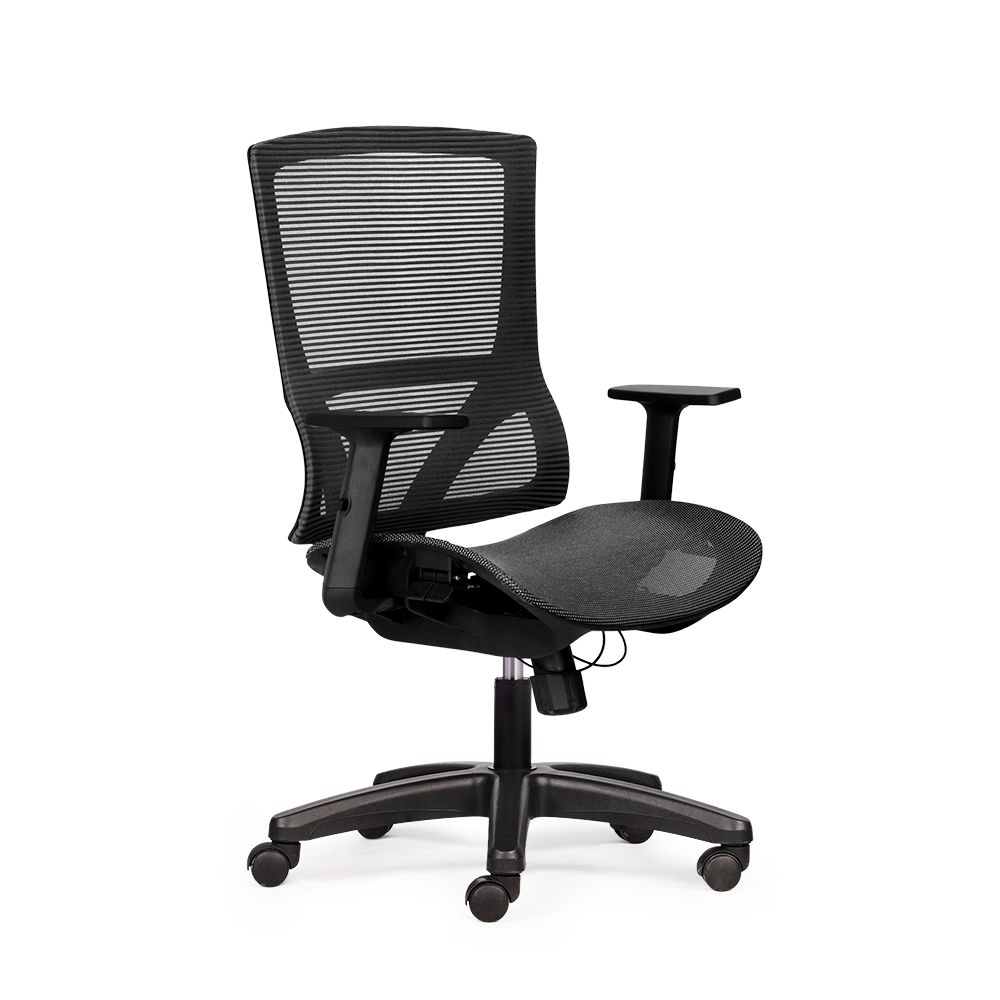
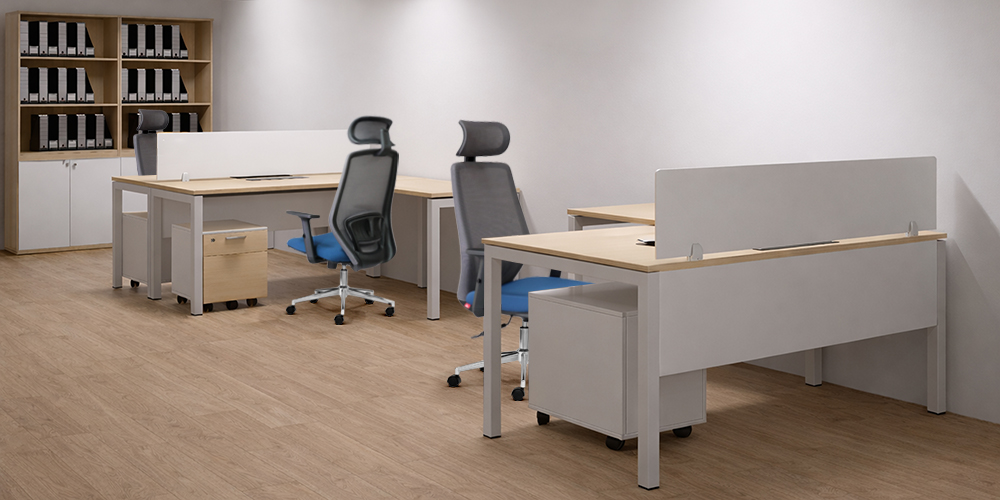
Staff office chairs are the most widely used type in today’s businesses, especially in open plan offices or fixed departments. Their common features are compact design, flexibility, and optimization for long hours of work.
Typically, these chairs include a medium height backrest that provides basic spine support, adjustable height to fit different body types, and a simple design that is easy to arrange in large spaces. Because of their high practicality and reasonable cost, staff chairs always account for a large share of market demand.
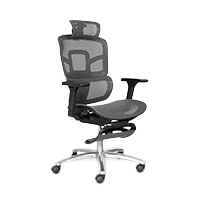
The Mia’s M1110 D - 01 staff chair is a typical example of the modern trend that focuses on ergonomics while keeping a compact design. It features a mesh headrest and backrest combined with an adjustable lumbar support to help users maintain proper posture and reduce fatigue during long working hours. A fifty millimeter thick high resilience seat cushion provides comfort, while adjustable armrests and a multifunctional control allow flexible use. With a BIFMA standard gas lift and a chrome plated steel base, this model is suitable for both focused offices and large scale layouts.
Swivel office chairs flexible and convenient
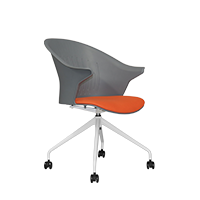
Swivel office chairs are designed with a 360 degree rotating base, allowing users to move and change posture easily during work. This makes them a popular choice in modern offices where flexibility and interaction are important.
Their main advantages include easy movement within the workspace, quick access to surrounding documents and equipment, and improved flexibility and efficiency. For people who work at high intensity, the M1103 F ergonomic chair is an upgrade from standard swivel chairs. It is designed to ergonomic standards, with a mesh back that follows the natural curve of the spine and multiple adjustment options to reduce pressure on the lower back. A retractable footrest allows short breaks, while the thick high resilience seat and polished aluminum base provide stability and comfort for all day use.
>>> Reference article: Flexible solutions for modern workspaces with swivel office chairs

Mesh office chairs breathable and modern
Mesh office chairs stand out with their mesh backrest, which improves airflow and reduces heat buildup when sitting for long periods. This makes them especially suitable for intensive working environments or hot and humid climates.
Their key benefits include less heat and discomfort, better back support thanks to the elasticity of the mesh, and a modern look that suits younger office styles. In the premium segment, the M1081 F ergonomic chair is a strong choice for spaces that demand both aesthetics and user experience. It features an adjustable headrest, a mesh back that closely follows the spine, two way adjustable armrests, a thick seat cushion, a strong aluminum base, and a footrest for optimal relaxation and durability. This model is often selected for management offices, executive rooms, or high end workspaces.
Cantilever office chairs stable and posture supportive
Cantilever office chairs use a fixed cantilever base instead of a swivel base, keeping the user in a stable position and supporting a more upright posture. They are popular in meeting rooms, training rooms, or individual work areas where stability and posture are important.
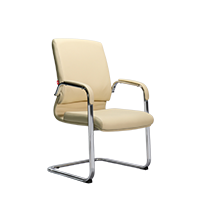
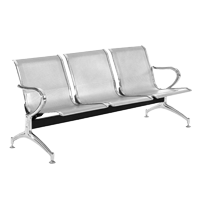
Their advantages include support for correct sitting posture, suitability for high concentration activities, and a solid design that limits unwanted movement. The M1039 meeting chair from The Mia is a representative cantilever model with a minimalist but durable design. It has a high quality faux leather backrest, a thick vinyl covered seat, and a chrome plated steel cantilever frame that ensures stability and ease of maintenance. Its compact and wheel free design makes it ideal for meeting rooms, waiting areas, and reception spaces.
>>> Reference article: A breathable solution for the workplace with mesh office chairs

Core functions of office chairs in real use
No matter the segment or style, an effective office chair must meet several fundamental functions. These factors determine long term user experience beyond aesthetics or price.
During long working hours, the office chair is the main point of contact between the body and the workplace. Its function goes beyond sitting and directly relates to physical health, mental state, and work efficiency.
A standard office chair should support the natural curve of the spine, especially the lower back, helping reduce back and neck pain, limit common office illnesses, and create a scientific and comfortable sitting posture. This is the most important factor when buying office chairs, especially for full time staff.
When users feel comfortable, they can focus better on their work. A suitable chair reduces constant posture changes and helps maintain a steady and productive workflow. Many companies see clear productivity gains from investing properly in staff office chairs.
Office chairs also contribute to the overall image of a workplace. Consistent design, color, and materials create a more professional and modern environment.
Important criteria when buying office chairs
Moving from understanding to evaluation, these criteria help businesses and individuals approach purchasing in a practical and sustainable way.
From consulting experience, The Mia has seen that many companies struggle because they lack clear evaluation standards. Choosing based on feeling or short term price often leads to issues later. Buyers should consider user suitability, material and durability, and adjustment flexibility rather than only the price.
Different positions require different levels of support. Staff need flexible and easy to use chairs, while managers need higher support. Correctly defining users helps optimize the budget. Materials such as mesh, fabric, or synthetic leather directly affect durability and comfort. Adjustment options for height and recline are essential, especially in offices with staff rotation.
Office chair price ranges today
Instead of a single figure, office chair prices vary by segment and purpose. Entry level chairs suit large scale staff use with basic functions and reasonable cost. Mid range chairs balance durability, comfort, and appearance. High end chairs focus on design, posture support, and finish, often for management or image driven spaces. Estimating the right segment from the start helps businesses manage budgets and avoid mismatches.
Practical applications by workspace
The same chair can feel very different in different working models. Corporate offices need uniform, easy to maintain chairs. Home offices require compact designs with proper posture support. Creative or startup spaces often prefer mesh or swivel chairs to encourage flexibility and movement.
Office chairs and long term cost management
Office chairs are not just an initial purchase but part of a long term cost equation tied to staff, productivity, and scalability. Poor choices lead to early replacement, health complaints, and full changes during office restructuring. Proper investment extends product life, reduces replacement and maintenance, provides stable user experience, and supports future layout changes. From a management view, chair price should be seen as an investment in sustainability and performance.
Where to buy office chairs for long term efficiency
In a diverse market, choosing the right supplier affects not only initial cost but long term results. A reliable provider offers a wide range of products, clear specifications, warranty and after sales service, and the ability to advise on space specific solutions.
As a company that implements interior solutions for many business models, The Mia approaches office chairs as part of the overall relationship between space, people, and performance. By proposing staff chair solutions aligned with each company’s operations and growth plans, The Mia helps optimize functionality, avoid wasted investment, and maintain consistency in the workplace.
Conclusion
Office chairs are not items to be chosen casually. From health and performance to spatial harmony and development strategy, making the right investment from the start brings clear long term value. Chairs influence user health, productivity, and the professional image of a business. They should be viewed not just by appearance or price, but as a long term investment in people and organizations. When chosen correctly, the workplace becomes more efficient, flexible, and cost effective.
If you are a business, dealer, or architect looking for flexible interior solutions, contact The Mia via hotline 1900 0324 or fill in the form on the website to receive free design consultation and 3D layout planning.
The Mia office interior solutions that are coordinated, modern, and professional.
Other news

- Business Registration Number: 0305955903, date of Issue: September 3, 2008
- Issued by: Department of Planning and Investment of Ho Chi Minh City
- Legal Representative: Nguyễn Thành Long

