


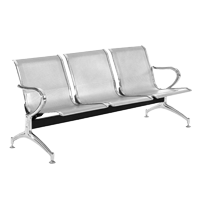

Easily disassemble a stuck office swivel chair – safe handling methods
Why are the chair parts difficult to disassemble after a period of use?
Before starting the process of dismantling an office swivel chair, understanding the reasons why components have seized up will help you choose the most suitable and effective solution:
- Gas lift jammed into the chair base: The gas lift cylinder features a precision-engineered tapered fit. Under the sustained weight of the user over years of continuous use, the top of the cylinder becomes wedged extremely tightly into the seat pan socket and the base hub.
- Dirt accumulation at connection points: Over time, industrial dust, sweat, and small debris settling into the crevices form a compacted layer that creates significant friction, making it difficult to disassemble the office swivel chair.
- Rusted or cross-threaded screws: Exposure to humid environments causes iron screws to oxidize, while misalignment during initial assembly (cross-threading) makes them extremely difficult to remove later. Therefore, it is important to use proper assembly techniques from the start to avoid these common issues. Refer to the guide "[Easily Assemble Your Office Swivel Chair: Avoid 7 Common Mistakes]" to learn the correct assembly method and prevent components from getting stuck in the future.
- Wheel jammed by hair and debris: Hair, threads, and lint are tightly wrapped around the wheel's metal axle, causing the retaining clip to seize up inside the chair leg socket.
- Component deformation due to misuse: Habits such as dropping heavily into the seat or leaning back beyond the standard weight limit can warp the metal joints, causing them to bind or stick when attempting to disassemble the office swivel chair.
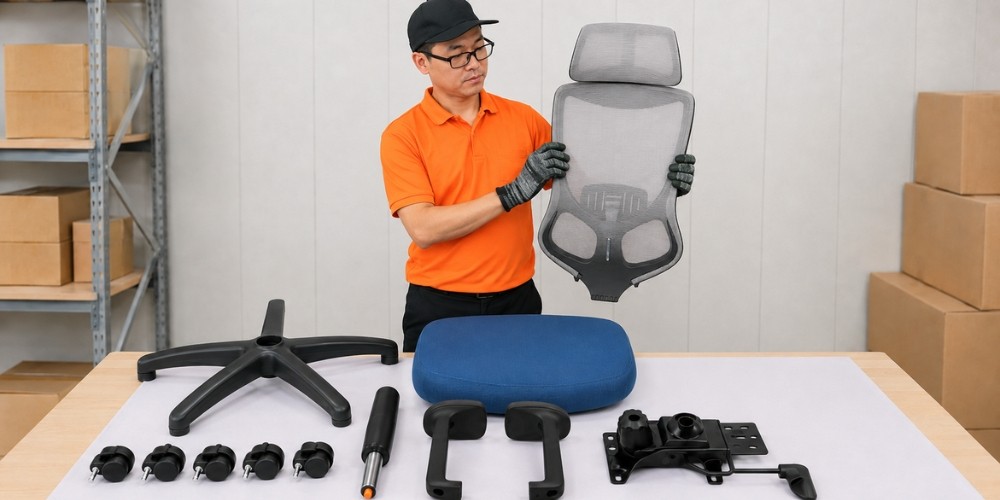
How to remove a stuck caster from a chair leg
As the wheels are in direct contact with the floor, they are prone to seizing up. To remove them without cracking or breaking the chair's leg base, follow these steps:
- Clean the area around the wheel pin: Use a small brush or vacuum cleaner to remove hair and dirt accumulated around the connecting pin slot; you may also spray a small amount of RB7 or WD-40 solution to loosen any rust.
- Pulling the wheel vertically: Firmly grasp the wheel body and pull sharply in a direction perpendicular to the floor. Avoid tilting it, as this can easily bend the internal metal pin.
- Apply even pressure at the connection point: If the wheel is too tight, gently insert a flat-head screwdriver into the gap between the wheel stem and the chair leg, then carefully pry around the area to create some play.
- Handling a caster with a broken internal pin: If the metal pin has snapped off and remains stuck inside the chair leg socket, use needle-nose pliers to firmly grip the protruding end and gently twist it out.
- Check the chair base sockets before installing new casters: After removing the old casters from the office chair, clean the inside of the sockets to ensure a snug fit for the new ones.
How to separate the gas lift cylinder from the base and the seat mechanism.
Detaching the gas lift cylinder from the base and seat mechanism is considered the most complex step in the entire process of dismantling an office swivel chair:
- Place the lounge chair on a protected surface: Lay down a rug or a piece of cardboard on the floor to prevent scratches to the upholstery and plastic frame during assembly.
- Detach the seat body from the base assembly: Turn the chair upside down; firmly grasp the five-star base with one hand while using the other to gently push and pull the seat body to check for any play in the connection joint.
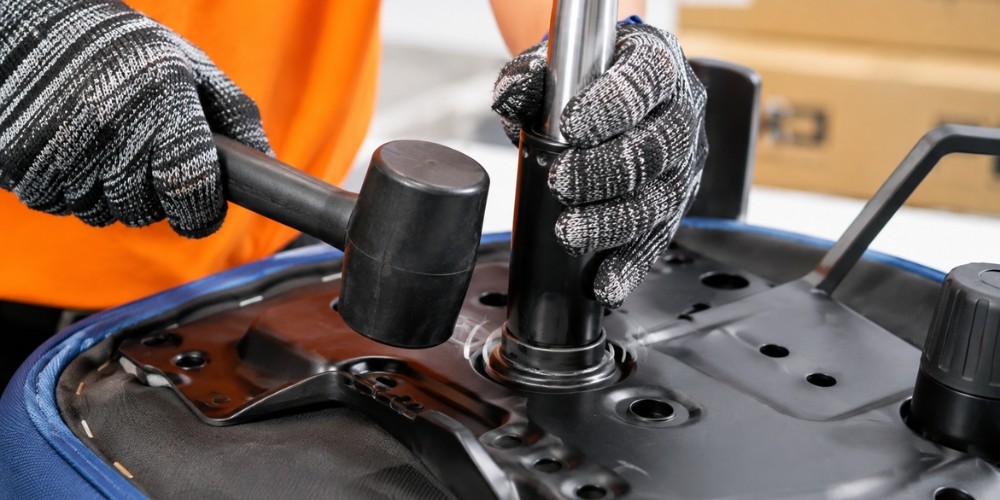
- Use a rubber mallet to apply force around the connection point: Hold the gas lift firmly with one hand, while using the other to tap lightly and evenly around the metal rim of the seat base or mounting plate, allowing the impact force to release the tapered joint.
- Avoid direct impact on the fork stanchion: Never strike the grey or gold-colored stanchion of the air fork directly, as this could damage the air release valve, creating a dangerous situation.
- Stop if the gas lift shows signs of deformation: During the disassembly of the office swivel chair, if you notice the gas lift casing is slightly dented due to excessive force, stop immediately to avoid damaging the entire control mechanism assembly.
How to remove stuck or stripped screws
The screw system connecting the seat pan and armrests is highly susceptible to having the screw heads stripped if the wrong tool is used. Here is the correct way to handle it:
- Select a tool that fits the bolt head snugly: Always use a hex key or hex screwdriver bit of the correct standard size (typically M6 or M8) to ensure a tight fit within the bolt's socket.
- Keep the tool straight when applying force: Position the screwdriver at a 90-degree angle to the screw head, apply firm downward pressure, and turn counter-clockwise to prevent the bit from slipping out of the slot.
- Loosen the screws one by one in a diagonal pattern: When disassembling the office chair's seat base, do not fully remove each screw immediately; instead, loosen each one by two or three turns in a diagonal sequence to relieve tension.
- Dealing with a stripped screw: Place a thin piece of rubber over the screw head and press the screwdriver firmly into it, or use locking pliers to grip the outer edge of the screw and turn it gently.
- Recognizing when technician assistance is needed: If a screw snaps off inside the plastic frame or the threads are completely stripped, you should stop attempting to disassemble the office chair yourself to avoid damaging the seat cushion structure.
Replaceable swivel chair parts at The Mia
After disassembling the office swivel chair and identifying damaged parts, businesses can easily find standardized replacement components from The Mia:
Wheels for specific floor surface types
The Mia offers a line of 50mm casters crafted from premium PU/Nylon. The wheel surfaces ensure smooth operation, prevent scratches on wooden floors, and minimize dirt accumulation, making future cleaning or the disassembly of office swivel chairs more convenient.
Armrests and headrest based on seat configuration
Replacement components—such as fixed armrests, 2D/3D adjustable armrests, and breathable mesh ergonomic headrests—are readily available and perfectly compatible with the profiles of current chair models.
Load-sensing lift forks
The chrome-plated or powder-coated gas lift system meets international BIFMA 85C/Class 3/Class 4 safety standards, offers robust load-bearing capacity ranging from 100kg to 150kg, and ensures smooth operation without the risk of pressure loss.
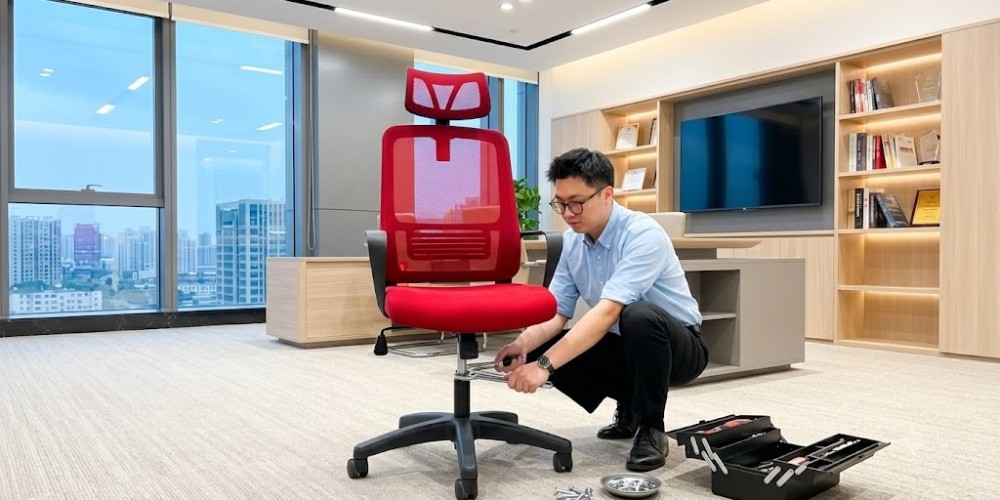
Lift and recline controller
Offers single-lever and dual-lever control mechanisms crafted from heavy-gauge steel, featuring a secure backrest tilt lock and a precise mechanical tension adjustment knob.
Assistance with verifying the correct part number.
The Mia’s technical team is always ready to assist customers in verifying specifications, providing instructions on the safe disassembly of office swivel chairs, and selecting the exact replacement parts.
Actions to avoid when dismantling an office swivel chair
To ensure your personal safety and preserve the value of the asset, you must strictly adhere to the following recommendations when dismantling the office swivel chair:
- Do not strike components with a steel hammer: The harsh impact force from a steel hammer can crack the virgin plastic frame and deform the metal threads, making it impossible to reassemble the chair.
- Do not pull the chair by the armrests or headrest; using the armrests as leverage to yank the chair—or pulling on the headrest—can snap the plastic fittings and tear the cushioned backrest.
- Do not disassemble components without understanding the structure: Avoid dismantling complex mechanical assemblies within the control console base unless you are fully familiar with the reassembly procedure.
- Do not attempt to repair the chair yourself while it is under warranty: If the product is still covered by the manufacturer's warranty, disassembling the office swivel chair on your own may void your eligibility for free repair services from the manufacturer.
Conclusion
Disassembling an office swivel chair requires following the correct sequence, using appropriate tools, and stopping immediately if any deformation is detected in the gas lift, screws, or casters. Before starting, carefully examine the chair's structure and note the position of each component to facilitate reassembly. If you require technical advice, need to identify the correct replacement parts, or seek assistance with safe handling, you can [contact The Mia] for support.
Other news

- Business Registration Number: 0305955903, date of Issue: September 3, 2008
- Issued by: Department of Planning and Investment of Ho Chi Minh City
- Legal Representative: Nguyễn Thành Long

