

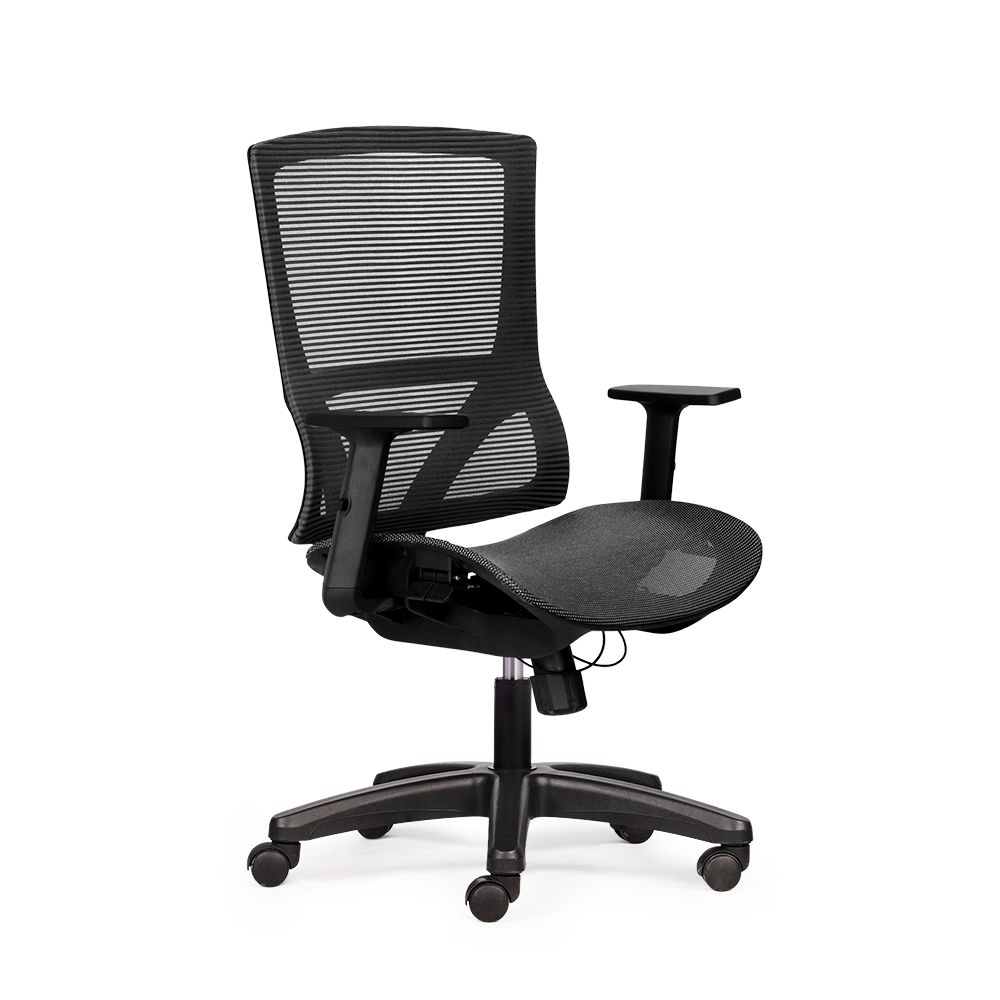
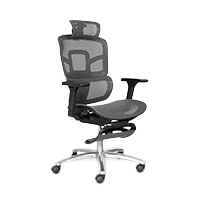
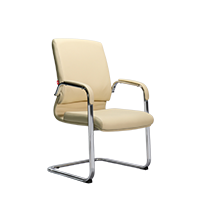
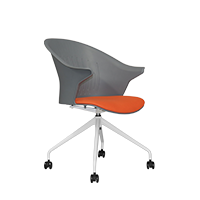
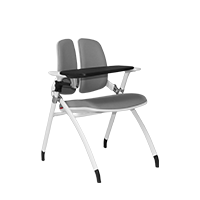


How to adjust The Mia ergonomic chair to "fit" your body perfectly
Why is it necessary to adjust The Mia ergonomic chair correctly?
A high-end ergonomic chair cannot fully realize its value if it hasn't been set up to suit the user's body. Adjusting it correctly from the start is the key step to making the sitting experience comfortable and sustainable every day.
-
Every body has different proportions: The chair needs to be adjusted according to individual height and build to create optimal balance.
-
Flexible design for personalization: Parts like the backrest, armrests, and seat cushion allow fine-tuning according to each working posture.
-
Reduces pressure on the spine: When the chair hugs the natural curves, force is distributed evenly, reducing back pain.
-
Limits neck, shoulder, and back fatigue: The headrest and armrests placed correctly help relax the shoulders and keep the neck in a neutral position.
-
Increases work performance: A stable posture helps you concentrate longer without being distracted by discomfort.
-
Prevents long-term postural deviations: Correct adjustment helps avoid habits like slouching or craning the neck forward.
-
Protects chair components: Proper weight distribution helps the frame and lift mechanism operate more durably.

>>> Check out The Mia ergonomic chair collection now.
Overview of parts needing adjustment on an ergonomic chair
An ergonomic chair only truly realizes its value when each part is set precisely according to the sitter's body. Before starting with how to adjust an ergonomic chair, you need to understand each important adjustment point.
-
Seat height: Determines the balance between the feet, knees, and hips to maintain a stable posture.
-
Seat depth: Directly affects blood circulation in the thighs and limits numbness when sitting for long periods.
-
Backrest and recline angle: Helps distribute pressure along the spine and supports relaxation at the right time.
-
Lumbar support: Maintains the natural lumbar curve and reduces strain on spinal discs.
-
Headrest: Supports the neck, keeping the head's axis neutral when working or taking short breaks.
-
Multi-dimensional armrests: Support the arms at the correct angle, helping shoulders relax and limiting muscle tension.
-
Recline lock mechanism: Keeps the chair fixed at a desired angle to ensure safety when maneuvering.
-
Recline tension: Adjusts the spring resistance suitable for body weight to increase comfort.
Basic principles before adjusting an ergonomic chair
Before you start adjusting, you need to understand that a few small actions can make a big difference in comfort and the chair's durability. Mastering the foundational principles will help the process of how to adjust an ergonomic chair become more accurate and effective.
-
Adjust the chair based on body measurements rather than initial feeling: Each person has different heights and limb proportions, so settings need to be based on a standard posture.
-
Follow the correct adjustment order: Always start with the seat height before fine-tuning other parts.
-
Place feet flat on the floor completely: Creates a balanced foundation for even weight distribution.
-
Keep your back against the chair when adjusting: Ensures all parameters are set in a standard sitting posture.
-
Combine with desk height: The desk and chair need to be compatible to avoid shrugging shoulders or bending the back.
-
Place the monitor at eye level: Keeps the neck in a neutral state, limiting shoulder and neck fatigue.
-
Adjust each part and sit for a few minutes to test: Give your body time to adapt before continuing adjustments.
-
Don't change too many parameters at once: Adjusting step by step makes it easier to find the most suitable position.
-
Sit and readjust after a few minutes: After completing the chair adjustment steps, try sitting and working for about 5-10 minutes. When your body starts to relax, you'll more easily notice points that aren't quite right and make additional adjustments.

How to adjust an ergonomic chair correctly, detailed step by step
A good chair only truly realizes its value when set up correctly according to the user's physique. A methodical approach to how to adjust an ergonomic chair will help maximize body support and minimize pressure on the spine throughout the long workday.
Step 1: Adjust seat height
In how to adjust an ergonomic chair, height is always the first foundation. Place your feet completely flat on the floor, thighs parallel to the ground, and knees at an angle of about 90-100 degrees to ensure stable blood circulation and prevent back strain.
Step 2: Adjust seat position
Next in how to adjust an ergonomic chair, you need to sit back against the chair, maintaining a small gap between the edge of the seat and the back of your knee. Avoid sliding your buttocks forward as this posture loses the lumbar support point.
Step 3: Adjust the backrest
At this step of how to adjust an ergonomic chair, the backrest must hug the spine's curve. Adjust the recline to a moderate angle when working and don't recline too deeply while operating.
Step 4: Adjust lumbar support
An important part of how to adjust an ergonomic chair is placing the lumbar cushion at the natural hollow of your back. Don't press too hard; adjust according to your feeling of comfort.
Step 5: Adjust armrests
Don't skip this step in how to adjust an ergonomic chair. Elbows should form an angle close to 90 degrees, shoulders relaxed, and armrests supporting the forearms while typing.
Step 6: Adjust headrest
Complete how to adjust an ergonomic chair by adjusting the headrest to support the neck. Your head shouldn't be pushed forward or tilted back excessively, ensuring suitability for both working and short breaks.

How to adjust an ergonomic chair according to user height
Each body height will have a different "fit" point when sitting and working for many consecutive hours. Understanding the principles for each body type group helps you apply how to adjust an ergonomic chair more accurately and comfortably every day.
-
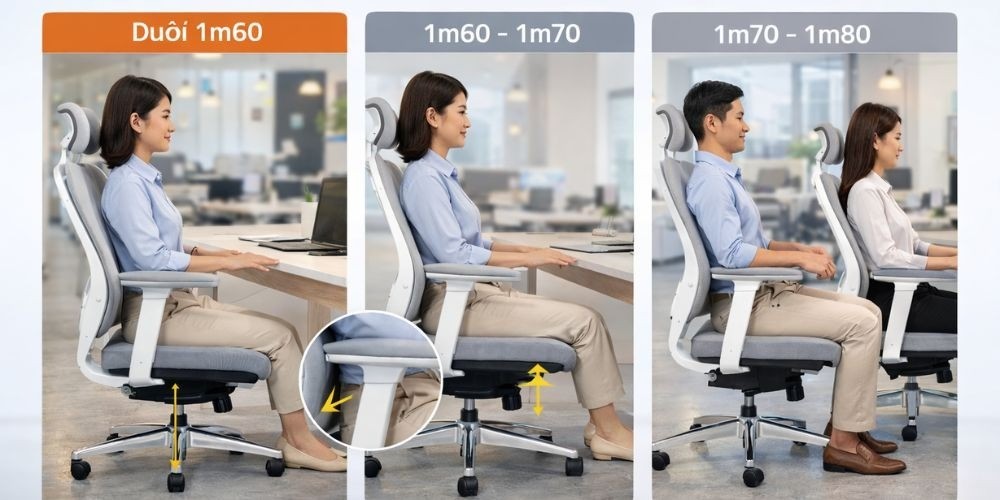
People under 1m60: Lower the chair height so feet touch the floor completely and avoid creating pressure on the back of the thighs.
-
People under 1m60: Adjust the seat cushion shallower to maintain a small gap between the seat edge and the back of the knee.
-
People from 1m60 to 1m70: Set the height so that thighs are parallel to the floor and knees open at about 90 to 100 degrees.
-
People from 1m60 to 1m70: Align armrests level with elbows so shoulders are always relaxed naturally.
-
People from 1m70 to 1m80: Slightly increase seat depth to support the entire thigh without compressing the back of the knee.
-
People from 1m70 to 1m80: Adjust the backrest to hug the spine's curve and lock the recline at a stable working angle.
-
People above 1m80: Adjust the chair height appropriately, combined with raising the headrest higher to fully support the neck area.
-
People above 1m80: Recheck the recline tension to ensure the chair frame bears weight evenly and force isn't concentrated towards the back.
Common mistakes when adjusting an ergonomic chair
Even owning a modern chair, many people haven't experienced maximum comfort because they make mistakes during adjustment. Understanding these common errors will help you perfect how to adjust an ergonomic chair and protect your spine more effectively.
-
Adjusting height based on feeling: Chair too high makes feet dangle; too low puts pressure on knees.
-
Skipping the seat adjustment step: Seat edge pressing against the back of the knee impedes blood circulation and causes rapid fatigue.
-
Not sitting back against the chair when adjusting: The spine lacks a standard support point, so all subsequent settings are inaccurate.
-
Placing lumbar support incorrectly: Lumbar cushion too high or too low misaligns the natural spine curve.
-
Leaning back too deeply while working: Puts strain on the recline mechanism and causes neck, shoulder, and back tension.
-
Adjusting armrests too high or too low: Shoulders hunch up or arms dangle, leading to muscle fatigue.
-
Changing multiple parameters at once: The body has difficulty adapting, and it's hard to identify the cause of discomfort.
-
Not rechecking after a period of use: The chair shifts gradually according to sitting habits without the user noticing.
How often should you readjust The Mia ergonomic chair?
Even an ergonomic chair that has been set up correctly still needs fine-tuning over time. Understanding when to readjust will help you maintain a standard posture and fully exploit the benefits from how to adjust an ergonomic chair.
-
When changing work habits: If you switch from a laptop to a separate monitor or change your daily sitting duration.
-
When experiencing back pain or shoulder/neck fatigue: Discomfort is a signal that your body needs you to readjust the chair parameters.
-
After significant weight gain or loss: Weight change directly affects the force distribution on the chair.
-
When sharing the chair with someone else: Each person has a different physique, so settings need to be re-established appropriately.
-
Periodically every 3 to 6 months: A general check helps maintain long-term stability and comfort.

Combine correct chair adjustment with scientific sitting habits
A good chair only fully realizes its value when paired with scientific sitting habits every day. After completing how to adjust an ergonomic chair, you need to maintain the following principles to protect your spine long-term.
-
Change posture periodically: Stand up and move gently every 45-60 minutes to reduce pressure on the back.
-
Always keep your back against the chair: Utilize the lumbar support system to maintain the natural spine curve.
-
Place the monitor at eye level: Limit bending the head, which causes neck and shoulder muscle tension.
-
Sit with balanced weight: Avoid crossing legs or leaning to one side for too long.
-
Incorporate short stretching between hours: Helps increase circulation and reduce accumulated muscle fatigue.
Conclusion
Through the article above, The Mia has provided a detailed and easy-to-apply explanation about how to adjust an ergonomic chair to fit each person's body perfectly. A few minutes of correct adjustment can make a big difference for spinal health and daily work performance. If you are still unsure if you have adjusted correctly, contact The Mia immediately for quick advice and support.
Other news

- Business Registration Number: 0305955903, date of Issue: September 3, 2008
- Issued by: Department of Planning and Investment of Ho Chi Minh City
- Legal Representative: Nguyễn Thành Long

