


Training chairs with wheels: A flexible solution for spaces
What are training chairs with wheels?
Training chairs with wheels are specialized training chairs for coaching rooms, equipped with a flexible swivel caster system under the chair base. This design allows users to move freely within the classroom space without needing to stand up, while also making it lighter and faster than ever to rearrange meeting room layouts.
When should you choose training chairs with wheels instead of fixed chairs?
Choosing between wheeled chairs and static chairs depends entirely on the purpose of use and the specific operational characteristics of your business's space. Below are key moments when training chairs with wheels become a superior solution compared to fixed chairs:
Spaces requiring continuous layout changes
-
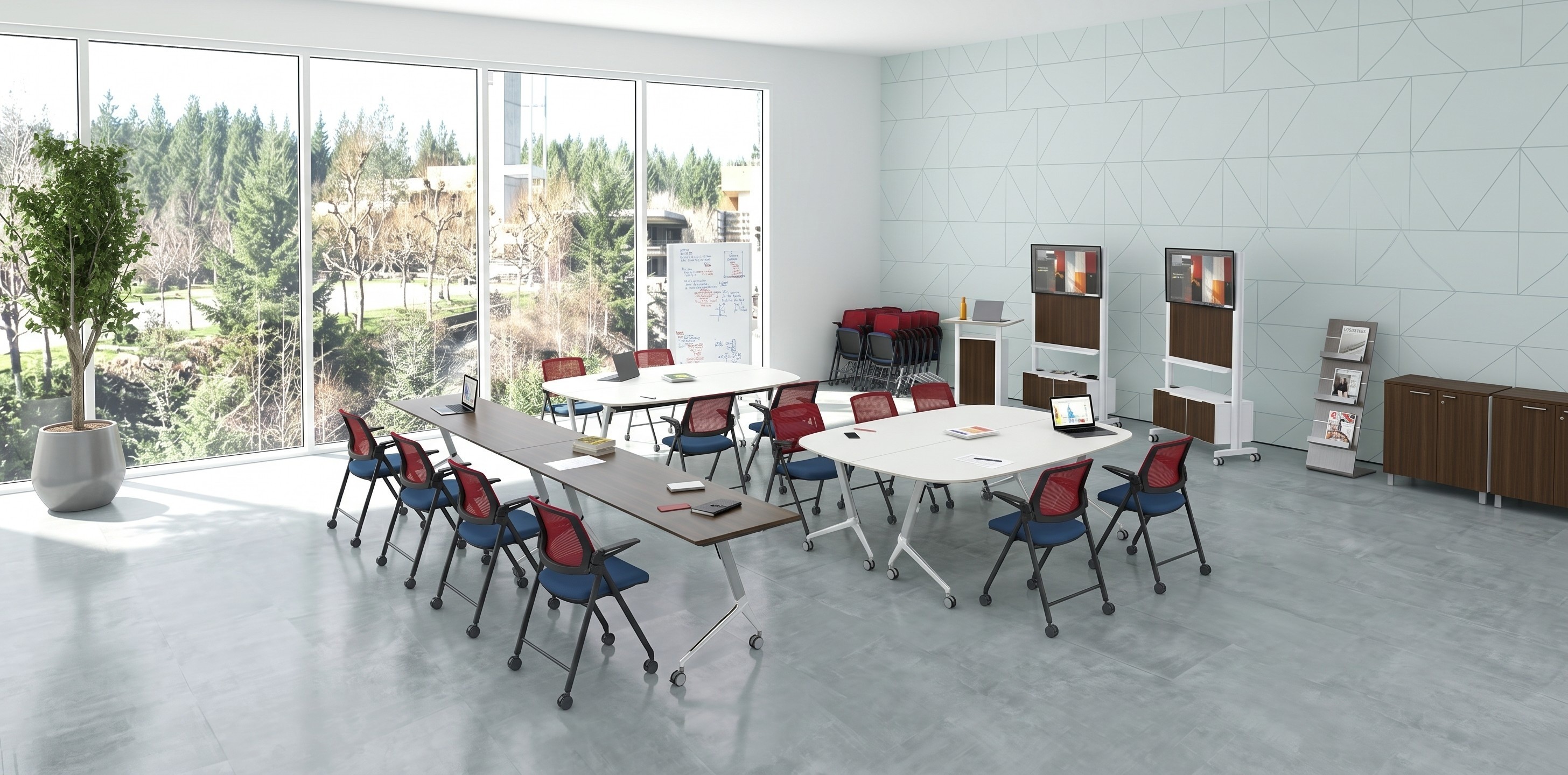
If your training room needs to use lecture-style seating in the morning and switch to a hands-on practice space in the afternoon, wheeled chairs are a must-have choice.
-
The mobility mechanism saves employees maximum time and effort since they don't need to lift heavy chairs to change positions.
Group training, interactive workshops
-
During discussions, learners can quickly swivel or move closer to form groups without causing unpleasant dragging noises on the floor.
-
Mobility helps break down distance barriers, promoting a lively learning atmosphere and increasing connections among members.
Businesses with multi-purpose rooms
-
For offices with limited area, where the training room often doubles as a meeting room or common activity area, wheeled chairs allow you to easily push them into a corner when you need open space.
-
This flexibility enables businesses to optimize floor space usage for various activities without being constrained by bulky static furniture.
>> See more: Premium training chairs: The right investment to improve training efficiency
3 real-life scenarios where training chairs with wheels prove effective
Applying a mobile leg system to the training environment helps businesses significantly save resources and operational time. Below are three practical scenarios where training chairs with wheels demonstrate superior value compared to traditional static leg chairs: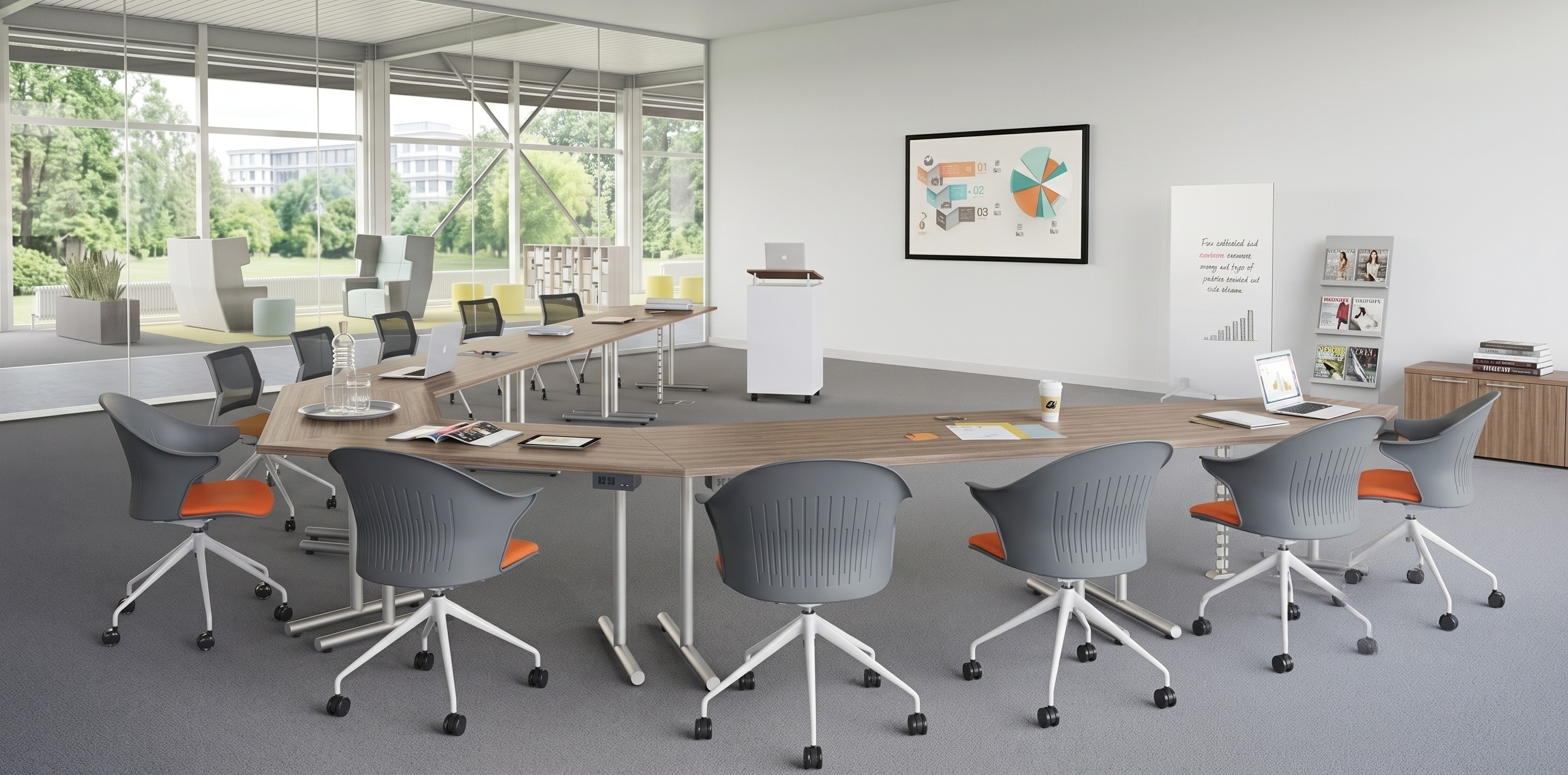
Quick classroom setup in 5-10 minutes
-
Instead of using many people to lift and carry heavy chairs, a single staff member can easily push dozens of wheeled chairs into place in an instant.
-
The smooth-operating plastic casters make classroom preparation professional, without causing noise that disturbs surrounding departments.
Switching from classroom layout to group discussion
-
When the instructor requires a change from lecture to discussion format, learners just need to push their chairs slightly to form circular clusters without standing up.
-
This feature helps maintain learners' emotional flow and concentration, eliminating unnecessary interruptions from rearranging bulky furniture.
Clearing the space after training
-
At the end of a training session, collecting chairs back to storage or pushing them against the wall to return floor space for other activities is extremely easy.
-
Especially with The Mia's chair models featuring foldable seats, you can stack chairs vertically, maximizing storage area for your business.
Training chair designs with wheels worth considering
The Mia's product system offers diverse mobile furniture solutions, helping businesses easily adapt to any 2026 training scenario. Below are typical designs that optimize flexibility:
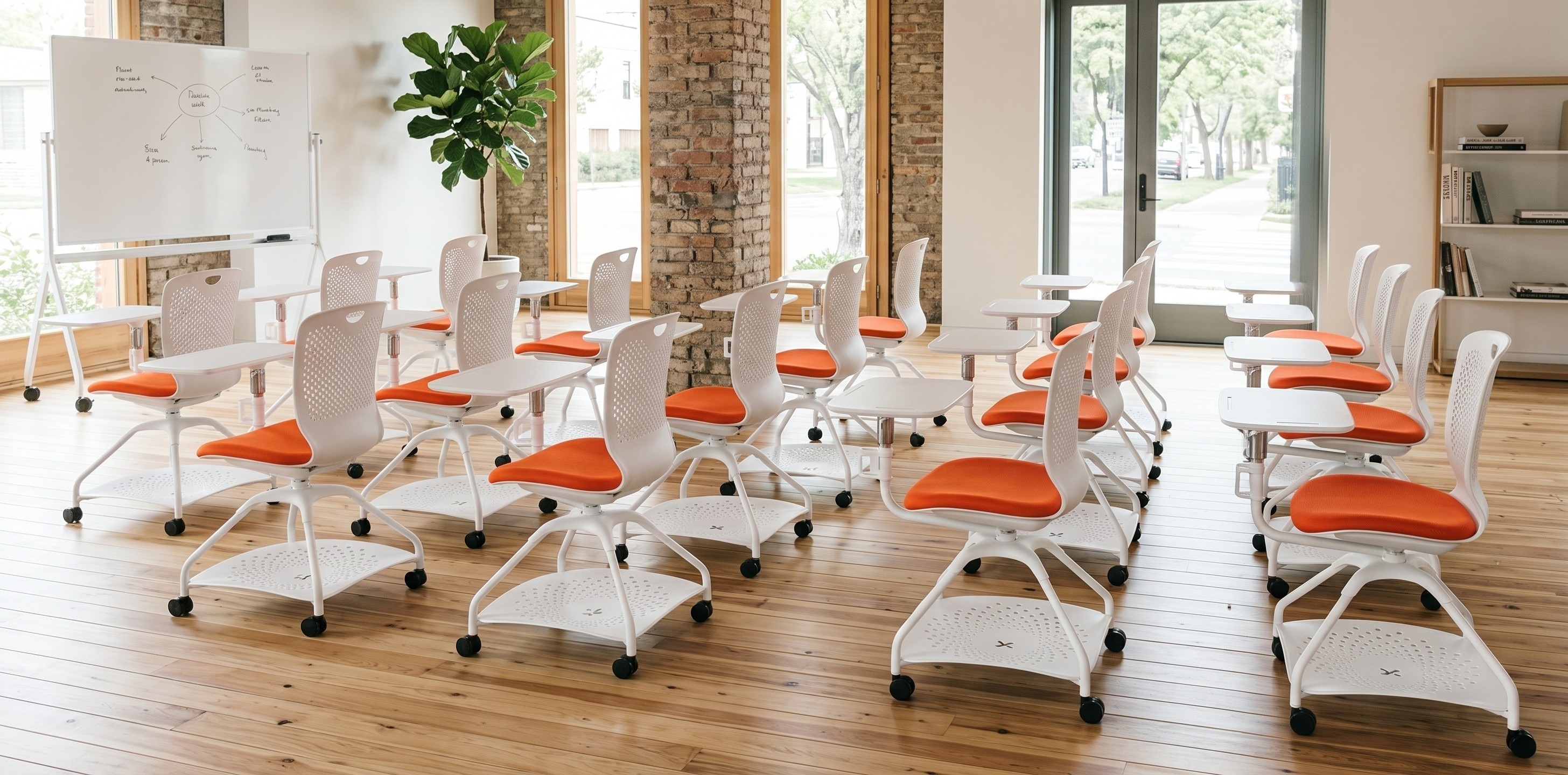
FOLDIX training chair with 360-degree swivel writing tablet
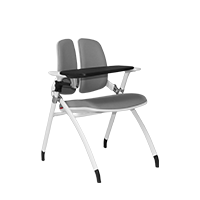
The product delivers a breakthrough in convenience with a 360-degree swivel writing tablet, serving both left-handed and right-handed users perfectly. The chair features a sturdy powder-coated steel leg base combined with agile plastic casters, plus a convenient under-seat storage compartment to keep the classroom space neat and professional.
MIND 02 training chair with integrated smart writing tablet
This is a top choice for modern learning spaces thanks to its combination of high-resilience PU foam padding and sliding adjustable plastic armrests. The powder-coated steel leg base and plastic casters allow users to easily change note-taking positions, enhancing interaction efficiency throughout the training process.
M1118 - 01 training chair with breathable mesh backrest
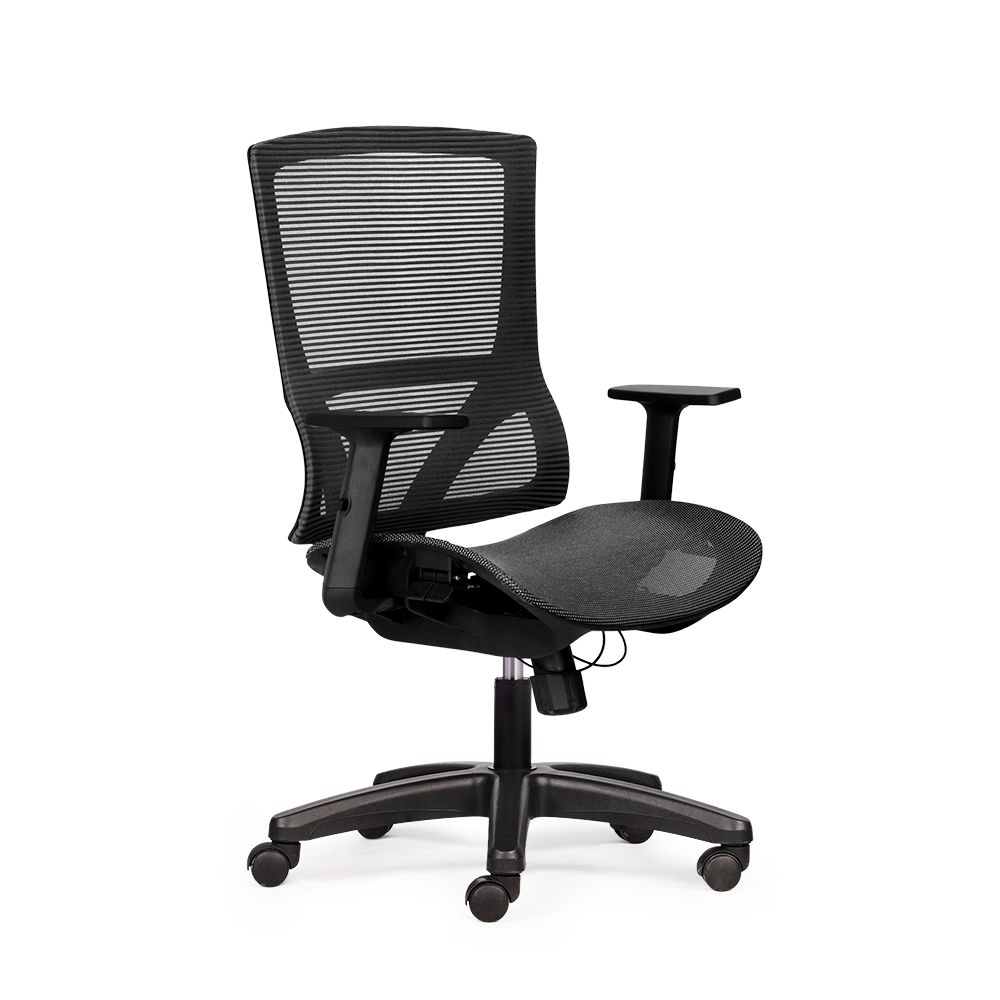
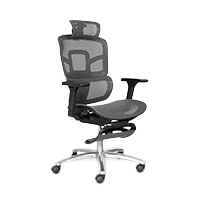
This design impresses with its compactness and effective air circulation thanks to the mesh backrest, reducing heat buildup during long sitting sessions. The high-resilience fabric-upholstered seat cushion, combined with adjustable plastic armrests and smooth-rolling casters, creates an ideal solution for dynamic workshops.
M1090 - 03 training chair with premium chrome-plated base
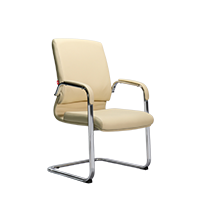
This chair focuses on durability and high load capacity (up to 100kg) thanks to its BIFMA international standard chrome-plated gas lift. The sturdy chrome-plated steel base combined with casters designed for hard floors ensures smooth operation, suitable for training rooms requiring high aesthetics.
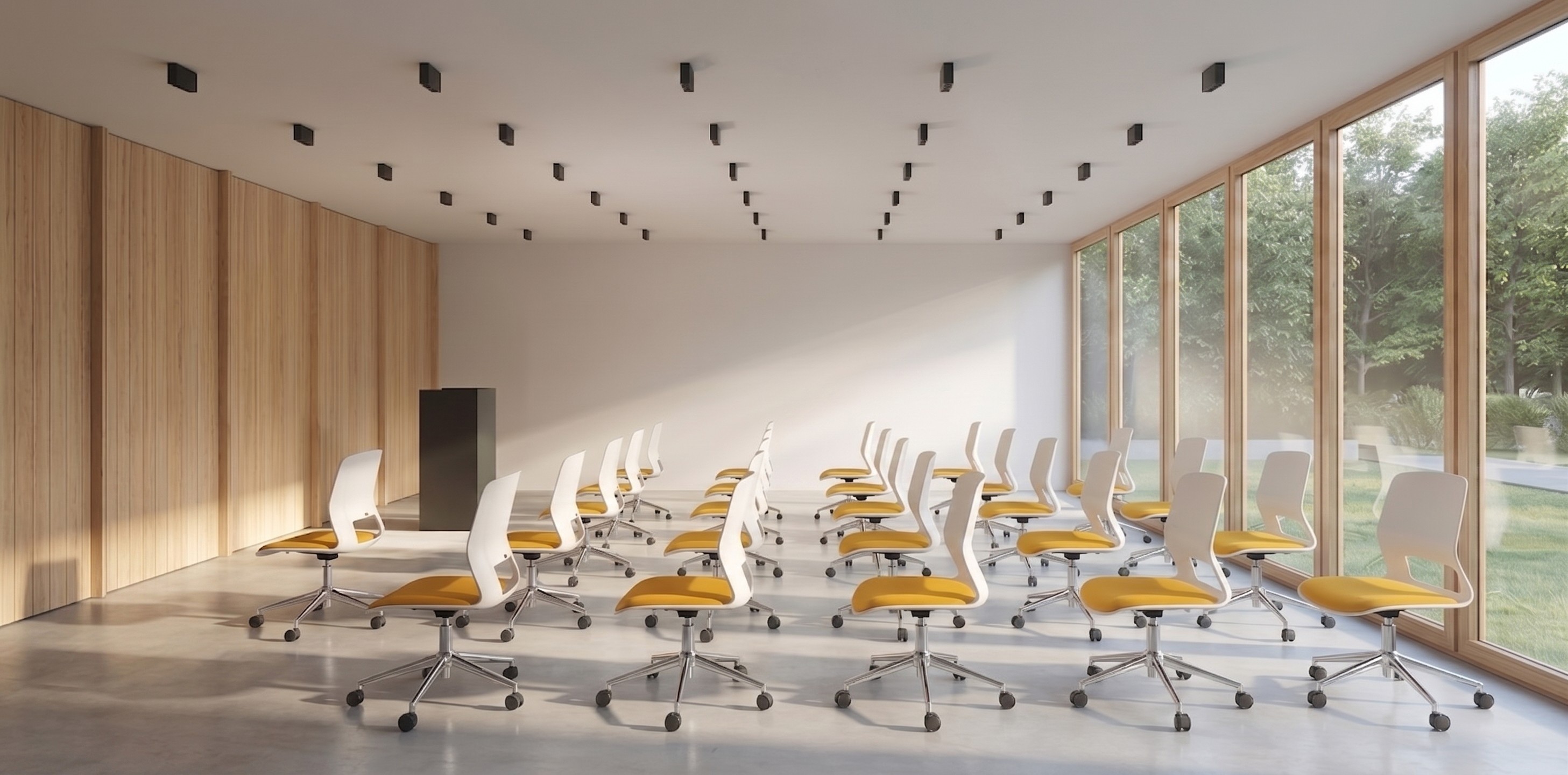
M1090 - 02 training chair with compact design
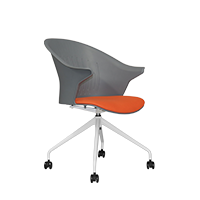
Featuring a modern white plastic frame structure and high-resilience padding, this chair is a flexible upgraded version for minimalist classroom spaces. The armless design optimizes arrangement space, combined with plastic casters to allow managers to change classroom layouts in just a few minutes.
>>> See more: Training chairs with desks: Convenient learning solution, space-optimizing
Criteria for choosing the right training chair with wheels
Establishing careful selection criteria helps businesses acquire durable furniture systems fully compatible with modern office floors. A correct investment decision in training chairs with wheels at The Mia will be based on the following key technical criteria:
-
Caster material and durability: Prioritize casters made from premium PU or Nylon to ensure smooth operation without scratching wooden floors or carpets.
-
Sturdy leg frame structure: Check the powder-coated steel leg system or sturdy molded plastic legs to guarantee stability when learners move around continuously.
-
Integrated writing tablet functionality: Choose chairs with flexible folding or swinging writing tablets to optimize note-taking functionality while maintaining compactness when moving chairs.
-
High-resilience seat cushion design: Select PU molded foam that resists deformation so learners remain comfortable and avoid fatigue during long training sessions.
-
Seat nesting or folding capability: For multi-purpose spaces, this criterion is extremely important, helping businesses easily store chairs and quickly free up floor space.
-
BIFMA standard gas lift system: A quality wheeled chair needs a gas lift with good load capacity, ensuring absolute user safety when changing positions.
-
Warranty and replacement parts policy: Prioritize direct manufacturers with a 2-year warranty policy to receive timely support for technical issues with casters and the leg frame.
Mistakes that make training chairs with wheels an "inconvenience"
Investing without proper technical standards can turn the mobility advantages of this chair line into a major barrier in educational environments. Early identification of the common mistakes below will help businesses protect their budget and maintain quality for every training session at The Mia.
Choosing low-quality casters
-
Using cheap hard plastic casters often produces an unpleasant squeaking noise when rubbing against the floor, directly interrupting the instructor's delivery.
-
Low-quality casters easily get clogged with hair or dirt, reducing smooth gliding and forcing users to push harder than necessary.
No locking mechanism
-
A chair that moves too freely while a learner leans on the writing tablet creates wobbling, causing distraction and discomfort for the user.
-
The lack of positional stability also makes rows of chairs easily misaligned, ruining the aesthetics and neatness of the initially established classroom layout.
Choosing chairs that are too heavy
-
Choosing a chair model with an overly thick leg frame or too many extra details defeats the purpose of inherent mobility.
-
Heavy chairs still consume a lot of effort to rearrange the classroom layout, failing to realize the fast setup advantage the business expected.
How to arrange training chairs with wheels to optimize training effectiveness
Fully leveraging the mobility of the moving leg system helps businesses flexibly transform spaces to suit specific teaching objectives. Below are seating arrangements for training chairs with wheels at The Mia that optimize interaction effectiveness in 2026:
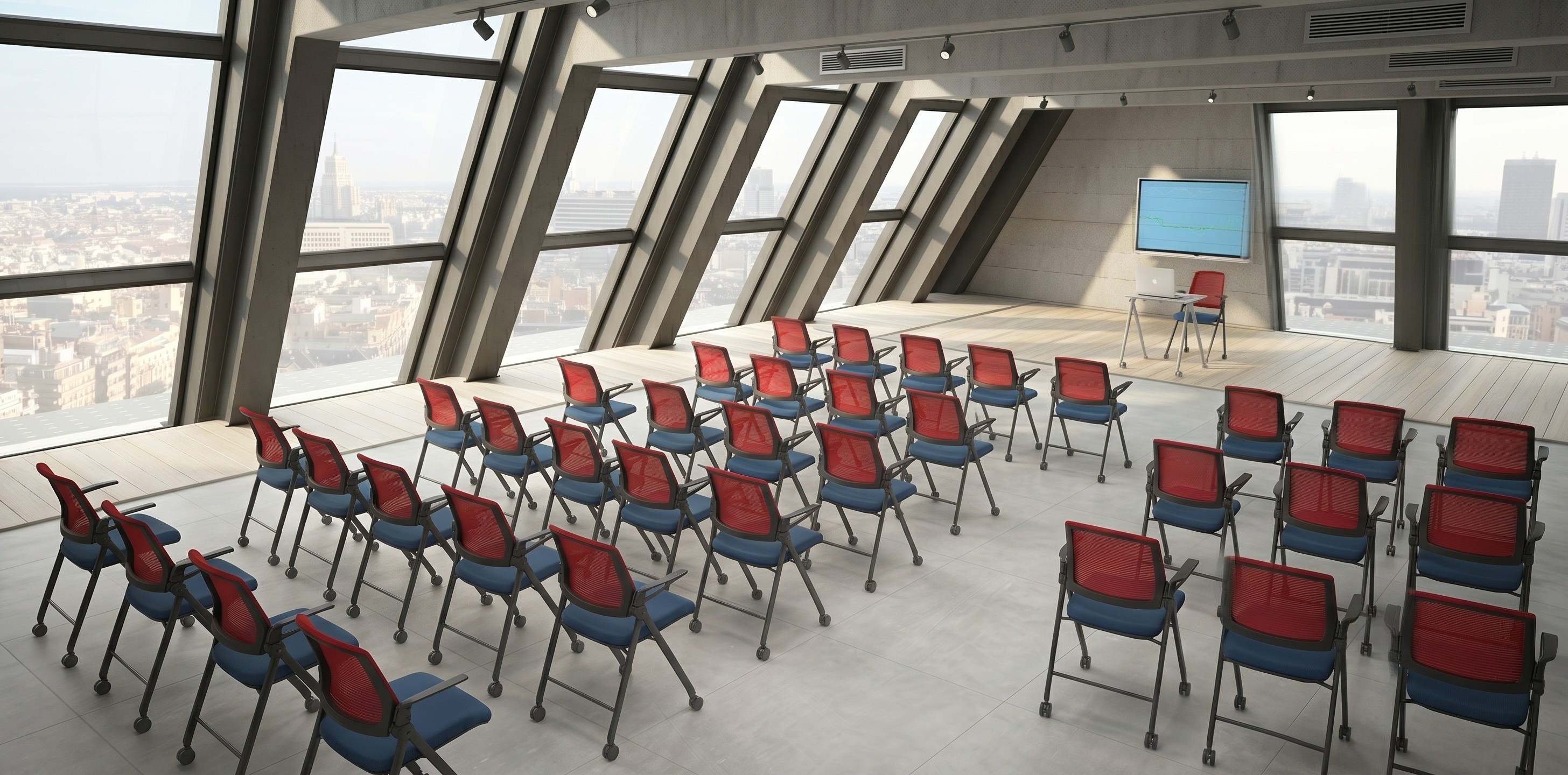
Flexible classroom layout
-
Arrange chairs in traditional rows facing the podium for concentrated theory delivery sessions.
-
Design sufficiently wide aisles between rows so learners can swivel or move out without affecting those around them.
-
This layout maximizes floor space usage, increases seating density while maintaining a neat, polished look for the space.
Small group workshop layout
-
Use flexible casters to quickly group 4-6 chairs into circular or square clusters for group discussion exercises.
-
Arrange clusters with adequate spacing to create private discussion areas for each group without noise interference from other groups.
-
This structure promotes face-to-face interaction, helping learners easily exchange ideas and present right from the chair's integrated writing tablet.
Multi-purpose training layout
-
Arrange chairs in a U-shape or horseshoe pattern so the instructor can move into the central area, increasing connection with each learner.
-
Push chairs close to both walls to free up the central floor area for movement activities, simulation games, or skills practice.
-
This layout transforms the training room into an open space, easily customizable to the training session's rhythm with just a few simple chair pushes.
Conclusion
Training chairs with wheels are not merely furniture items but a smart strategy to optimize area usage and increase interaction for every workshop. Investing in a BIFMA-standard mobile leg system is how businesses demonstrate professionalism and consideration for their learners. Contact The Mia today for advice on the most flexible writing tablet-integrated chair models for your office.
Other news

- Business Registration Number: 0305955903, date of Issue: September 3, 2008
- Issued by: Department of Planning and Investment of Ho Chi Minh City
- Legal Representative: Nguyễn Thành Long

